Ad Spy Tools help marketers research competitor ads, uncover recurring creative patterns, compare offers and identify campaigns that appear to be scaling. In 2026, the strongest platforms do more than display active ads: they add historical data, filters, advertiser tracking, creative scoring, ecommerce intelligence, or landing-page research.
The right choice depends on whether you need mobile app creative intelligence, Meta research, ecommerce discovery, affiliate data, native ads or broad cross-network coverage.
Key Takeaways
- Ad Spy Tools are most useful for discovering patterns and testing ideas, not copying competitors.
- Long-running ads, repeated creative use, and cross-platform distribution can be useful signals, but they do not prove profitability.
- Mobile apps, ecommerce brands, affiliates, and social advertisers often need different research workflows.
- Competitor research works best when you turn the findings into original creatives and validate them with your own campaign data.
What Are Ad Spy Tools?
Ad Spy Tools are competitive research platforms that organize advertising creatives from networks such as Meta, Google, TikTok, native networks and display publishers.
Depending on the ad spy tool, you may be able to search by advertiser, keyword, domain, country, date, format, engagement, landing page or platform.
The goal is not simply to spy competitor ads and reproduce them. A better approach is to identify repeated hooks, offers, visual styles, CTAs, and creative structures, then adapt those patterns to your own audience and product.
What to Look for in an Ad Spy Tool
When comparing tools for ad spy research, start with the channels you actually advertise on.
Look for platform coverage, data freshness, historical depth, advertiser tracking, filters, creative analysis, landing-page intelligence, export options and pricing.
Also remember that “winning” indicators are indirect. Duration, engagement, reuse, or estimated activity can help prioritize ads, but they cannot reveal a competitor’s actual profit or ROAS.
10 Best Ad Spy Tools in 2026
| # | Tool | Best For | Key Strength | Pricing |
|---|---|---|---|---|
| 1 | Winneradspy Mobile-first intelligence | Mobile apps & games | Winner/Loser creative intelligence | $19/mo |
| 2 | Trendtrack Ecommerce intelligence | Ecommerce intelligence | Store + ad + competitor tracking | $59/mo |
| 3 | AdPlexity Affiliate research | Affiliates & performance | Specialized traffic research | From $149/mo By product |
| 4 | BigSpy Broad ad discovery | Broad creative research | Multi-platform discovery | Free Starter $69/mo |
| 5 | PowerAdSpy Multi-platform research | Multi-platform needs | Network-based research | $1 Basic trial Then $69/mo |
| 6 | AdSpy Meta-focused research | Facebook & Instagram | Deep social-ad search | $149/mo |
| 7 | Anstrex Native ad intelligence | Native advertisers | Native campaign intelligence | $79.99/mo Native |
| 8 | Minea Ecommerce research | Ecommerce brands | Product + shop + ad research | $49/mo |
| 9 | AdBeat Display intelligence | Display advertising | Publisher intelligence | $249/mo |
| 10 | AdFlex Cross-network research | Cross-network research | Multi-network discovery | Free Pro €99/mo |
1. Winneradspy
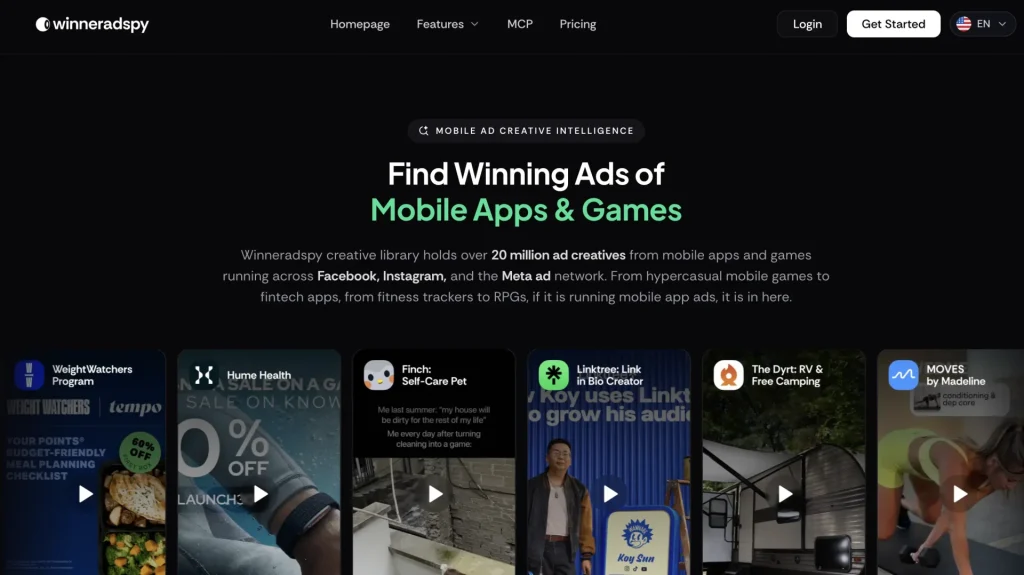
Winneradspy is designed specifically for mobile apps and games. Instead of only displaying a creative library, it classifies creatives as Winner or Loser and gives each ad a 0–100 Winner Score.
Best For:
- Mobile app and game marketers researching competitor ad creatives with this ad spy tools.
- User acquisition teams that want performance signals instead of browsing ads manually.
- Creative strategists looking to understand why certain competitor ads keep performing.
Winneradspy Pricing:
| Plan | Price | Best For |
|---|---|---|
| Pro | $19/month | Ongoing competitor and creative intelligence |
| Lifetime | $249 one-time | Long-term access without a recurring subscription |
Winneradspy focuses specifically on mobile apps and games. It combines competitor creative discovery with Winner, Learning and Loser classifications plus a 0–100 Winner Score.
Key Features:
- Mobile app and game creative library.
- Winner, Learning, and Loser creative classification.
- AI-powered 0–100 Winner Score.
- Analysis of hooks, visuals, emotions, messaging and CTAs.
- Competitor app and developer research.
- Meta and Google ad creative intelligence.
- Competitor Listening and creative monitoring.
- MCP workflows for researching ads through AI assistants.
Pros:
- Built specifically around mobile app and game advertising.
- Goes beyond basic ad discovery with creative scoring.
- Helps separate potentially strong creatives from ads that simply exist in a library.
- Useful for creative research before producing new campaign variations.
- Lower entry price than many general-purpose Ad Spy Tools.
Cons:
- Much more specialized than broad ecommerce or affiliate ad spy platforms.
- Less relevant for businesses that do not advertise mobile apps or games.
- Public independent review coverage is still relatively limited.
What Users Say:
Independent third-party review coverage is still limited compared with older Ad Spy Tools. Winneradspy’s main differentiator is its mobile-first approach and its attempt to explain why competitor creatives perform through Winner Scores, creative classifications, and AI analysis rather than presenting an undifferentiated ad database.
2. Trendtrack
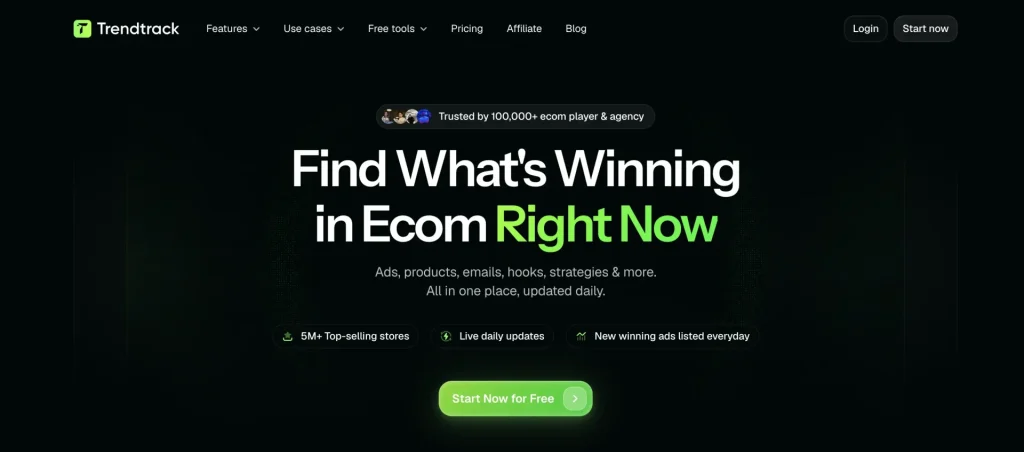
Trendtrack combines ecommerce intelligence with store research, ads, advertiser data, email monitoring, and BrandTracker.
Best For:
- Ecommerce brands monitoring competitors across stores, ads, products, and emails.
- Performance marketers looking for fast-growing ecommerce stores and creative trends.
- Agencies that want ongoing competitor tracking rather than one-off ad searches.
Trendtrack Pricing:
| Plan | Price | Best For |
|---|---|---|
| Starter | $59/month | Store and competitor research |
| Pro | $89/month | Ads, BrandTracker, API and MCP workflows |
| Business | $149/month | Larger teams and unlimited research workflows |
Trendtrack combines ecommerce store intelligence with ad discovery, competitor monitoring, emails, traffic signals, and BrandTracker. Its data is designed around identifying what ecommerce brands are doing now rather than only searching historical creative libraries.
Key Features:
- Ecommerce store intelligence.
- Meta, Google, and TikTok ad research.
- Ad and advertiser discovery.
- BrandTracker competitor monitoring.
- Store traffic and product analysis.
- Email campaign and flow research.
- Saved folders and team collaboration.
- API and MCP access on eligible plans.
Pros:
- Connects ads with the wider ecommerce strategy behind them.
- Useful for tracking competitors over time rather than researching individual ads.
- Strong combination of store, product, ad, and email intelligence.
- Helpful for identifying brands that appear to be scaling.
Cons:
- Broader ecommerce intelligence may be unnecessary for advertisers who only want an ad library.
- API and MCP functionality are not included with every plan.
- More ecommerce-focused than general-purpose Ad Spy Tools.
What Users Say:
Trendtrack has a relatively strong recent public review profile. Trustpilot currently shows 83 reviews, with feedback frequently praising the breadth of its ecommerce research. One recent criticism specifically noted that MCP/API access requires a higher plan than Starter, so teams interested in AI workflows should check plan limits before subscribing.
3. AdPlexity
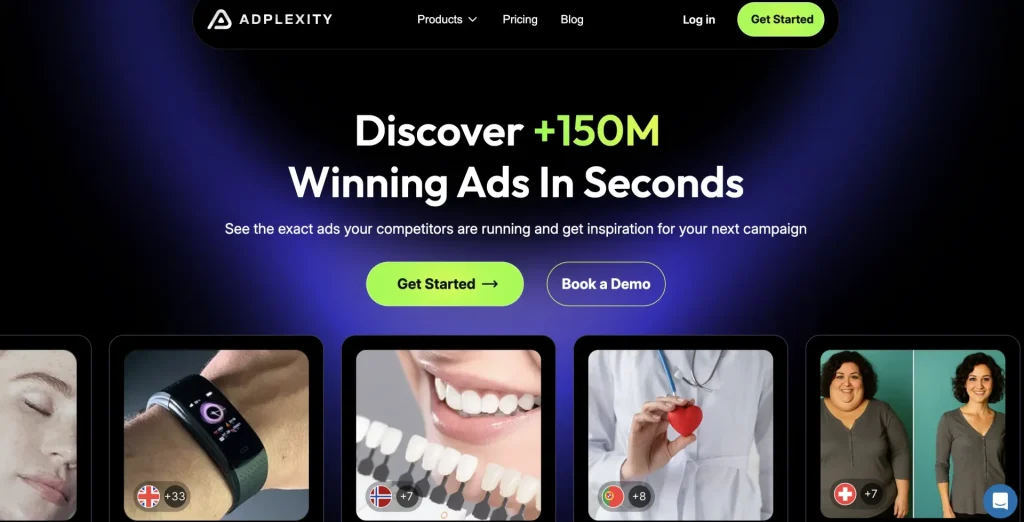
AdPlexity is built for affiliate and professional performance marketers. Its products cover Native, Desktop, Mobile, Push, YouTube, and additional traffic sources.
Best For:
- Professional affiliate marketers and media buyers.
- Teams researching native, push, display, mobile, or YouTube advertising.
- Performance marketers that need detailed traffic-source intelligence.
AdPlexity Pricing:
| Product | Price / Month | Best For |
|---|---|---|
| Push | $149 | Push advertising research |
| YouTube | $149 | YouTube ad intelligence |
| Mobile / Desktop | $199 | Mobile and desktop traffic |
| Native | $249 | Native affiliate campaigns |
AdPlexity separates its research products by traffic source instead of putting every advertising channel into one subscription. It is particularly established among affiliates and professional performance marketers.
Key Features:
- Native ad intelligence.
- Push campaign research.
- Desktop and mobile advertising research.
- YouTube ad intelligence.
- Landing page discovery.
- Traffic-source and geographic filters.
- Competitor campaign research.
- Affiliate-focused workflows.
Pros:
- Deep specialization across performance advertising channels.
- Strong fit for affiliates and experienced media buyers.
- Detailed filters make it easier to narrow large datasets.
- Landing pages and funnels add context beyond individual creatives.
Cons:
- Separate subscriptions can make full coverage expensive.
- More complex than beginner-focused Ad Spy Tools.
- There is currently no standard free trial for the core AdPlexity products.
What Users Say:
Public feedback on the main AdPlexity product is mixed and based on a relatively small Trustpilot sample. Recent positive reviewers highlight its data depth, filtering, and usefulness for native and affiliate research, while some negative reviews criticize subscription management and pricing.
4. BigSpy
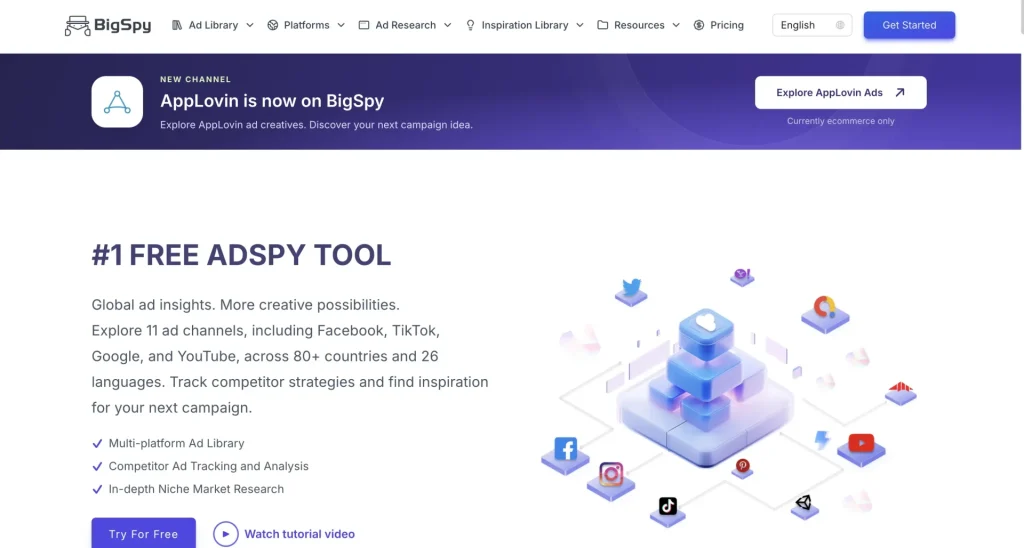
BigSpy offers broad creative discovery across multiple platforms. It has a free plan, while the current Starter tier costs $69/month and covers Facebook, Instagram, and AppLovin.
Best For:
- Marketers looking for a broad ad database across several platforms.
- Beginners who want to start competitor research with a free plan.
- Creative teams searching multiple networks for inspiration.
BigSpy Pricing:
| Plan | Price | Best For |
|---|---|---|
| Free | $0 | Limited Facebook ad research |
| Pro | $149/month | Multi-platform research |
| VIP | Custom | Larger teams and customized usage |
BigSpy currently advertises a free plan and a $149/month Pro plan. Its database covers multiple international advertising channels, making it one of the broader Ad Spy Tools in terms of platform variety.
Key Features:
- Multi-platform ad database.
- Facebook, Instagram, Google, YouTube, TikTok, Pinterest, and additional networks.
- Keyword and creative search.
- Page analysis.
- Landing page insights on paid plans.
- Facebook page tracking.
- Creative downloads.
- Advanced filtering.
Pros:
- Free entry point for basic research.
- Broad network coverage.
- Useful when inspiration needs to come from several platforms.
- Large creative database.
Cons:
- More advanced functionality requires the paid plan.
- Broad databases can require more filtering to find relevant ads.
- Public customer feedback is considerably more mixed than the feature set alone suggests.
What Users Say:
BigSpy’s Trustpilot profile currently has 25 reviews and a low overall score, although the sample is relatively small. Recent complaints mention pricing, site speed, customer support, and billing experiences, so users should evaluate the free tier before committing to a paid subscription.
5. PowerAdSpy
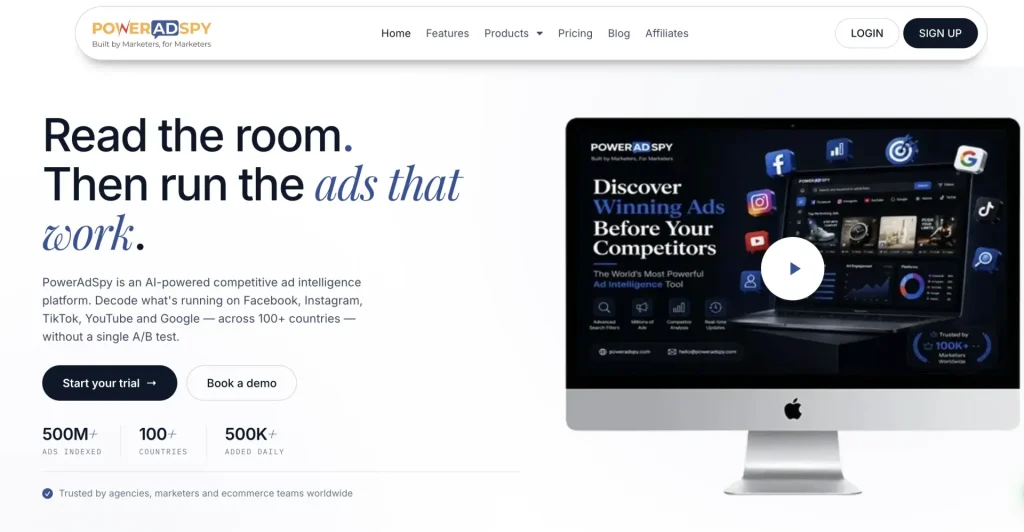
PowerAdSpy organizes its offering around different network bundles. The Basic plan currently costs $69/month for Facebook and Instagram and begins with a $1 three-day trial.
Best For:
- Marketers researching Facebook and Instagram competitors.
- Agencies that gradually need access to more advertising networks.
- Teams that want advertiser, keyword, domain, and ad-level filters.
PowerAdSpy Pricing:
| Plan | Price | Network Coverage |
|---|---|---|
| Basic | $69/month | Facebook + Instagram |
| Standard | $99/month | Adds Pinterest + Google Display |
| Platinum | $279/month | Adds YouTube, Native + Google |
| Palladium | $399/month | All 11 supported networks |
The Basic plan also currently offers a $1 three-day trial, while higher plans use a $7 three-day trial. Network coverage expands as the subscription level increases.
Key Features:
- Keyword, advertiser, and domain search.
- Facebook and Instagram ad research.
- CTA and country filters.
- AI metadata filters.
- Ad Tracker.
- Advanced ad analytics on higher tiers.
- Device, affiliate, ecommerce, and funnel filters.
- Estimated ad budgets on selected plans.
Pros:
- Broad feature set.
- Plans let teams expand platform coverage gradually.
- Strong filtering options for detailed competitor research.
- Useful combination of social, search, display, and native intelligence.
Cons:
- Full cross-platform coverage becomes expensive.
- Some advanced functionality is locked behind higher plans.
- Public feedback around billing and support is mixed.
What Users Say:
PowerAdSpy has 57 Trustpilot reviews with mixed feedback. Positive reviewers mention competitor research, ad trend discovery, and ease of navigation, while several recent negative reviews raise concerns about cancellation, billing, refunds, or search relevance.
6. AdSpy
AdSpy remains highly focused on Facebook and Instagram. Its searchable data includes ad text, advertiser information, URLs, reactions, comments, affiliate networks, technologies, media, and dates.
Best For:
- Facebook and Instagram advertisers.
- Affiliate marketers researching Meta advertising.
- Marketers who prioritize detailed audience and ad filters.
AdSpy Pricing:
| Plan | Price | Best For |
|---|---|---|
| Standard Access | $149/month | Facebook and Instagram ad intelligence |
AdSpy uses a single primary subscription priced at $149 per month and focuses heavily on Facebook and Instagram advertising intelligence.
Key Features:
- Facebook and Instagram ad research.
- Keyword and advertiser search.
- Location, gender, and age targeting information.
- Affiliate network filtering.
- Offer and affiliate research.
- Landing page intelligence.
- Large searchable advertising dataset.
- Detailed search filters.
Pros:
- Highly focused on Meta advertising.
- Strong demographic and affiliate-oriented filters.
- Straightforward single-plan pricing.
- Useful for marketers who do not need broader platform coverage.
Cons:
- Limited compared with cross-platform Ad Spy Tools.
- $149/month may be difficult to justify for occasional research.
- Not designed around ecommerce store or mobile app intelligence.
What Users Say:
Independent public review volume is small and dated. Trustpilot currently shows only eight reviews and no reviews from the past 12 months, with much of the historical feedback negative. Because the sample is both limited and old, it should not be treated as a complete picture of the current product experience.
7. Anstrex
Anstrex offers several intelligence products aimed at different performance channels. Anstrex Native is currently $79.99/month, while InStream is $39.99/month.
Best For:
- Native advertising specialists.
- Affiliate marketers researching landing pages and creatives.
- Performance marketers working across native, push, and pop traffic.
Anstrex Pricing:
| Plan | Price / Month | Coverage |
|---|---|---|
| Native Solo | $79.99 | Native advertising |
| Native + Push | $139.99 | Native and push networks |
| Ultimate Combo | $219.99 | Native, push, and pop traffic |
Anstrex’s Native product includes advanced search, competitor alerts, landing-page tools, and coverage across dozens of native networks and countries.
Key Features:
- Native advertising intelligence.
- Push and pop research through additional plans.
- Advanced filtering.
- Landing Page Ripper.
- Competitor alerts.
- Keyword search.
- Affiliate network detection.
- Country and network research.
Pros:
- Strong specialization in native advertising.
- Landing Page Ripper is useful for funnel research.
- Competitive pricing compared with some specialist alternatives.
- Good fit for affiliate marketers.
Cons:
- Less relevant for teams focused mainly on Meta or ecommerce social ads.
- Interface and filtering can take some time to learn.
- Products are more performance-marketing focused than general creative inspiration tools.
What Users Say:
Anstrex has a 4.2/5 rating from 12 reviews on G2. Reviewers commonly praise its value for money and competitor intelligence, while some mention that the filtering system can be confusing. The review count is still relatively small.
8. Minea
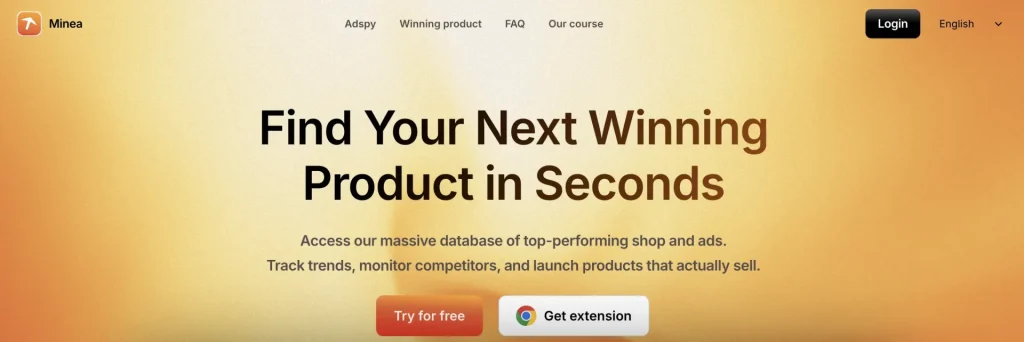
Minea combines advertising intelligence with ecommerce product and store discovery.
Best For:
- Ecommerce and dropshipping brands.
- Marketers looking for both product and competitor ad research.
- Teams connecting winning ads with stores, suppliers, and products.
Minea Pricing:
| Plan | Price / Month | Best For |
|---|---|---|
| Starter | $49 | Initial product and ad research |
| Premium | $99 | Higher-volume research and tracking |
| Business | $199 | Unlimited research workflows |
Minea combines Meta ad discovery with product listings, shop research, Brand Tracker, AI ad analysis, transcripts, and ecommerce-oriented ad spy tools.
Key Features:
- Meta ads listing.
- Product and shop research.
- Brand Tracker.
- Daily niche lists.
- AI ad analysis.
- AI transcription.
- Magic Search.
- Supplier and product discovery.
- Ecommerce trend research.
Pros:
- Connects ad research with actual ecommerce products.
- Strong fit for Shopify and dropshipping workflows.
- Useful combination of product, store, and competitor intelligence.
- AI features help speed up ad analysis.
Cons:
- Ecommerce focus makes it less useful for SaaS, apps, or non-product businesses.
- Advanced usage becomes significantly more expensive.
- Some public reviews question data freshness and interface quality.
What Users Say:
Minea has a much larger public review footprint than many competitors, with more than 300 Trustpilot reviews and a current score around 3.9/5. Positive reviewers often mention product research and information depth, while negative reviews sometimes cite outdated ads, data accuracy, interface issues, or billing concerns.
9. AdBeat
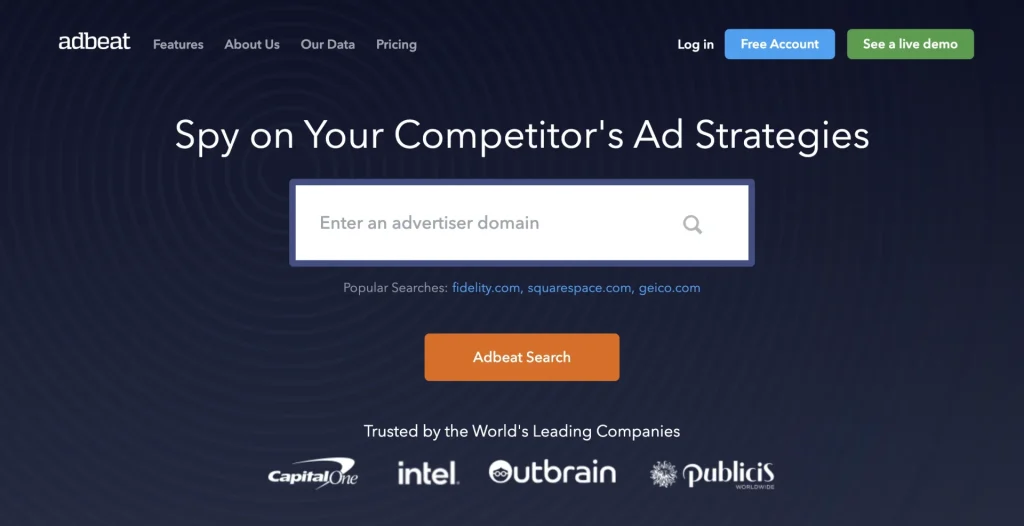
AdBeat specializes in display, programmatic, and native advertising intelligence. Its Standard monthly plan currently starts at $249.
It provides advertiser, ad, and publisher search, placement URLs, reporting, and historical data. Higher plans add competitor alerts and deeper advertiser intelligence.
Best For:
- Display and programmatic advertising teams.
- Agencies researching advertisers and publishers.
- Media buyers that need placement and publisher intelligence.
AdBeat Pricing:
| Plan | Price / Month | Best For |
|---|---|---|
| Standard | $249 | Core display and native research |
| Advanced | $399 | Competitor alerts and deeper intelligence |
| Enterprise | Custom | Large-scale advertising intelligence |
AdBeat specializes in display, programmatic, and native advertising rather than social-first ad discovery. The Standard plan includes advertiser, ad and publisher research plus 90 days of historical data type of ad spy tools.
Key Features:
- Display and native advertising intelligence.
- Advertiser search.
- Publisher research.
- Placement URLs.
- Desktop and mobile filtering.
- Date and ad network filters.
- Competitor alerts on Advanced.
- Advertiser comparison.
- Historical campaign data.
- Estimated spend on Enterprise.
Pros:
- Strong publisher-level intelligence.
- Useful for understanding display placement strategy.
- Detailed competitor and advertiser research.
- Advanced plans offer deeper historical data.
Cons:
- Expensive compared with social-focused Ad Spy Tools.
- Less useful for teams primarily running Meta or TikTok creatives.
- Some advanced competitive data requires higher plans.
What Users Say:
AdBeat currently has a 4.1/5 G2 rating from 10 reviews. Recent feedback highlights comprehensive data, reporting, and a relatively straightforward interface. As with several specialized tools in this category, the public review sample remains fairly small., and media-buying teams.
10. AdFlex
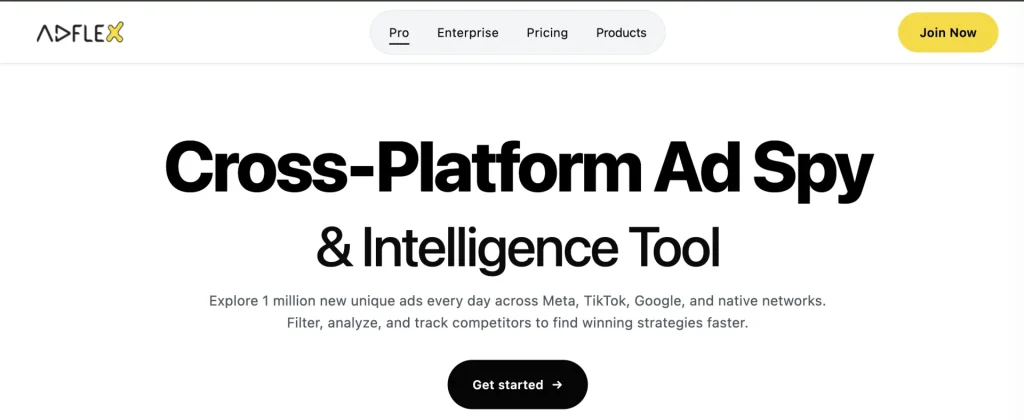
AdFlex focuses on cross-network competitor research. Its current Free plan includes Meta access and 2,000 credits, while Pro costs €99/month.
Best For:
- Marketers researching competitor ads across several networks.
- Beginners looking for a free Meta research option.
- Teams that want ad discovery, ecommerce research, and competitor tracking in one interface.
AdFlex Pricing:
| Plan | Price | Best For |
|---|---|---|
| Free | €0 | Meta research with 2,000 credits |
| Pro | €99/month | High-volume cross-platform research |
| Enterprise | Custom | API and larger-scale workflows |
AdFlex currently supports research across Meta, Facebook, YouTube, TikTok, X, Pinterest, Reddit, Google Display, and native advertising sources. Its Pro plan starts with 100,000 monthly credits.
Key Features:
- Cross-platform ads library.
- Mega Search across multiple networks.
- Platform, industry, country, format, and date filters.
- Competitor analytics.
- Domain-level advertiser history.
- Ecommerce intelligence.
- Ad bookmarking.
- Competitor tracking and alerts.
- API access for Enterprise users.
Pros:
- Very broad network coverage.
- Free Meta access gives users a low-risk starting point.
- Combines ads, analytics, and ecommerce research.
- Suitable for both beginners and more advanced teams.
Cons:
- Credit-based usage may require monitoring for frequent researchers.
- Enterprise is required for API access.
- Public independent reviews are still limited compared with older Ad Spy Tools.
What Users Say:
Independent third-party review coverage is still relatively limited in the sources reviewed. AdFlex’s clearest differentiator is its attempt to combine a large cross-platform ad library, competitor analytics, ecommerce research, tracking and a free entry tier in one product.
How to Use Ad Spy Tools Without Copying Competitors
The best ads spy tools should shorten research, not replace creative strategy. Start by saving several relevant ads and identify what repeats: the hook, offer, visual structure, proof, CTA, or landing-page angle. Then convert those observations into hypotheses.
For example, if several long-running competitor videos use problem-first UGC openings, test that mechanism with your own product, script, creator, and proof rather than recreating the competitor’s ad with these ad spy tools.
A useful workflow is:
- Research five to ten competitor creatives.
- Group them by hook, offer, format, and CTA.
- Identify repeated patterns.
- Build original creative variations.
- Compare CTR, CPC, conversion rate, CPA, and ROAS.
This turns Ad Spy Tools into an ongoing learning process instead of a folder of ads you never use.
Turn Competitor Research Into Better Creatives With WASK
Ad Spy Tools show you what competitors are testing. The next step is turning that research into original creatives that you can validate with your own performance data.
With Ad Spy Tools, you can turn an interesting hook, angle, or format into new image, video, and UGC-style creative variations for your own brand.
The workflow is simple: research the market, create something original, test it, and let your own campaign data decide what deserves more budget.
Frequently Asked Questions
What are Ad Spy Tools used for?
Ad Spy Tools help marketers research competitor creatives, offers, formats, landing pages, and campaign patterns across one or more advertising networks.
Can an ad spy tools tell me whether an ad is profitable?
No. Ad duration, engagement, repeated use, and platform presence can be useful signals, but they do not reveal a competitor’s actual costs, margins, attribution, or ROAS.
What is the best way to spy competitor ads?
Start with known competitors, filter for recent and long-running ads, compare several creatives, and look for repeated patterns instead of judging one ad in isolation.
Are free ad spy tools enough?
Free access can work for occasional research. Paid Ad Spy Tools become more valuable when you need historical data, deeper filtering, advertiser tracking, exports, creative intelligence, or cross-platform workflows.